
Consultation
Human-Animal Solutions has the
Skill to Give You Peace of Mind
Human-Animal Solutions offers consultation on a variety of animal-assisted services to address your needs.
Competency-Based Assessment
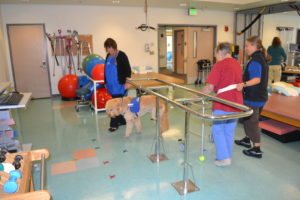
We can develop competency-based assessment for both the animal and the handler that is specific to your site. A one-size-fits-most screening tool cannot address the uniqueness of your facility. Human-Animal Solutions’ competency-based assessment is designed to help facility or group staff measure the handler-animal team’s competence in skills necessary to inspire confidence in the people they visit while maintaining safety.
Competency-based assessment assures you that the handlers entering your program (whether volunteer or paid) are both suitable and qualified to meet your needs.
Ann’s latest book, Assessing Handlers for Competence in Animal-Assisted Interventions, helps you develop your own competency-based assessment.
My administrator came to me after your presentation and said, ‘You hired the right person for this job.’ ”
Thanks so much! You’ll be pleased to know that is a question that had eluded not only me, but also my assistant, for several months! You’ve solved a long-standing mystery for us.”
Hospitals & Other Human Service Facilities
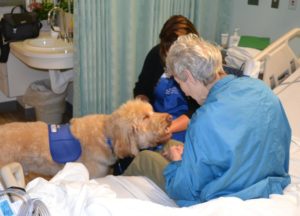
Many human services staff members (administrators as well as direct-care staff) are interested in taking advantage of the human-animal bond – the relationship between people and animals – to assist their clients. One way of doing this is to offer visits from therapy dogs or other therapy animals handled by volunteers. Another way is to have trained staff provide animal-assisted services. These interactions come in the form of activities, and/or therapy on the menu of healing options offered to clients.
The presence of trained and screened therapy animals in therapy sessions can have a powerful, positive effect on people with an affinity for animals.
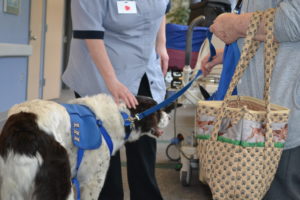
Imagine someone who loves dogs and who has been hospitalized after a stroke. This person works on physical therapy, occupational therapy, or speech therapy exercises with average motivation. Now imagine bringing in a dog and asking the person to do the same therapy exercises, but with one major difference: the patient gets to work with the dog instead of the therapist’s cones or blocks or puzzle pieces. For people who enjoy dogs, you can see what a difference it can make when the goal is to reach out to pet a dog rather than reaching out to pick up a wooden block!
I appreciate your gracious responses to me. Your willingness to step up to the plate and be there in an instant for staff reflects your commitment to the work and total support to the team. Thank you again, Ann, for being such a wonderful person to work with.”
You have a special warmth that makes one feel good about oneself. A true gift well used.”
IF the animal-handler teams are trained and screened. IF the patient is not fearful or allergic. IF the handler knows how to work both with the animal and with the patient. IF the facility staff know what to do to keep people safe.
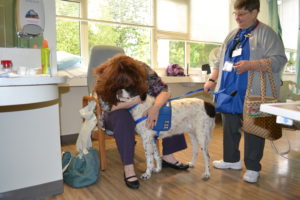
As you can see, it is not as effortless as simply allowing a therapy dog to come into your facility. In order to be successful and safe for all involved (including the animal), lots of people need to know what they’re doing.
As a result, not all staff have confidence that they can adequately address risk management. Areas like infection control, injury, fleas, animals acting badly, and allergies make them shudder – as well they should! Human-health and -services organizations today often struggle to make ends meet for essential services, and animals don’t seem essential. Is there a way to make ends meet and include animals? Yes! Human-Animal Solutions knows how.
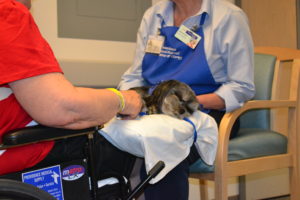
We provide cost-effective consultation about all areas of developing a new or enhancing an existing therapy animal program. To assure quality and protect the client, therapy animal programs must be standards- and competency-based. Ann Howie was part of the team of subject-matter experts who developed Standards of Practice in Animal-Assisted Activities & Therapy in 1989, and she developed the first competency-based professional education program for human-services providers (through the University of Denver) in 2017. Ann is highly conversant in standards and competencies. She can help you avoid common pitfalls and thus enhance staff, volunteer, and patient satisfaction – and save money.
We help you meet your needs for both people and animals. Here are some common areas about which our consultation services have been utilized:
Policies and Practices
Do your current practices reduce risk and satisfy infection control? Human-Animal Solutions is familiar with facility needs in written policies and the primary issues that must be addressed in animal-related policies. We help you develop complete, standards-based policies and competency-based practices before therapy animals are introduced.
Feasibility Study
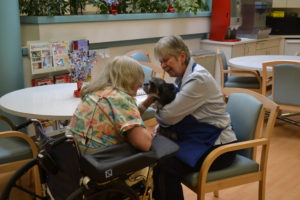
Do you know how your facility’s environment, dynamics, staff, and patients/clients will affect the provision of AAI? We so! Ann will tour your facility and meet with key staff members to provide a standards-based feasibility study for your facility. You will receive a detailed written report that includes individualized strengths and barriers, options, and a plan of action.
Very amicable and articulate speaker. Well-organized materials and presentation.”
Your joy and comfortableness in working with community groups is so evident. You are gifted and awesome! I feel confident referring people to you.”
Staff Training
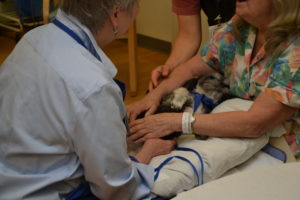
Do you know how to receive insurance reimbursement for animal-assisted therapy? Staff we train do! Staff learn how to work effectively with therapy animals in the professional environment: identify patients/clients who are appropriate for AAI, work effectively with the AAI provider, write AAT into treatment plans, and more.
Volunteer Selection and Training
Most facilities utilize volunteers to get the most from their AAI dollar. We will help you add well-trained and -screened volunteers who demonstrate competence in providing AAI. Basic training for volunteers includes the following and more:
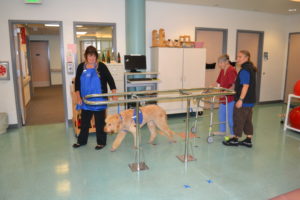
- Working effectively with staff
- Following infection-control procedures
- Maintaining therapy animal grooming for hospital (or other) environments
- Assessing therapy animal health and behavior prior to making a visit
- Sharing the therapy animal appropriately with specific populations
- Behavioral predictability in common situations found in your facility
- Handler’s ability to manage his/her animal while working effectively with clients and staff
- Animal’s ability to engage appropriately with clients and staff while still working as a team member with handler
- Handler’s ability to provide guidance to their therapy animal in a conversational, non-threatening way
Credentialing Body Survey Preparation
We help you obtain high marks on your facility’s animal program in Joint Commission, CARF, and local government surveys.
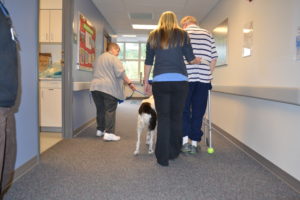
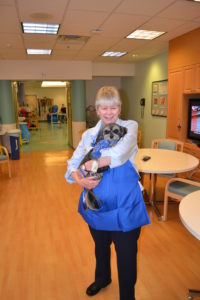
Ann’s skilled and compassionate professionalism provides you the best in training and consultation for therapy animal programs. If you don’t find your issues in the above list, contact us for additional information.


